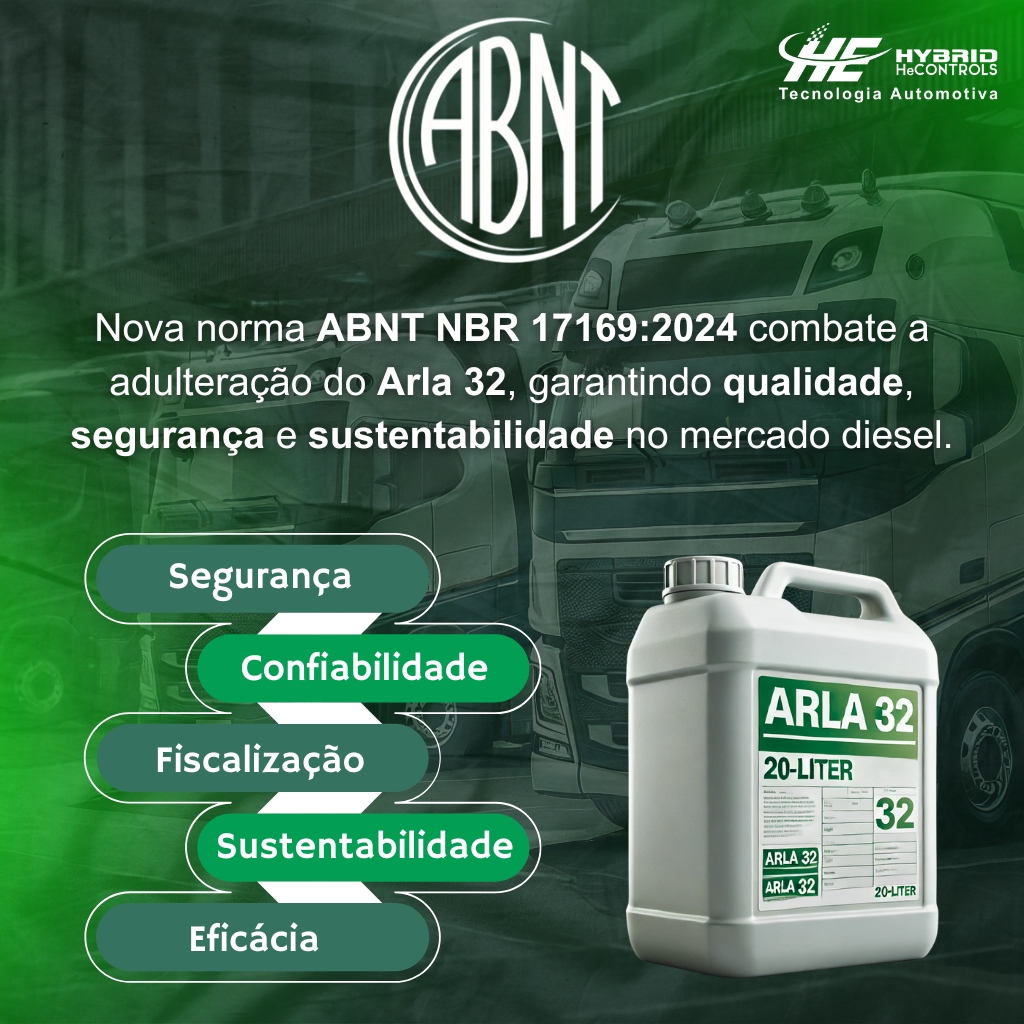
The quality of AdBlue, a crucial component for reducing emissions in diesel vehicles, has just gained an important reinforcement. The recently published ABNT NBR 17169:2024 establishes a method for evaluating the aldehyde content in the urea used in AdBlue production, combating adulteration and ensuring product quality.
What changes for automotive repairers?
The new standard directly impacts the repairer’s work, offering:
• More safety: AdBlue adulteration, often carried out with fertilizer-grade urea, can cause serious damage to catalysts and other emission system components. With the new standard, repairers have another tool to ensure product quality and protect their clients’ engines.
• Reliability: The standard brings greater reliability to the entire automotive chain, from manufacturers to end consumers. Repairers, as an essential link in this chain, can deliver higher quality and more trustworthy services to their customers.
• Easier inspections: The new standard facilitates environmental inspections, making fraud detection faster and more efficient. This contributes to a fairer and more competitive market, where repairers who work with quality products are valued.
• Sustainability: Adulterated AdBlue harms the environment by compromising the product’s effectiveness in reducing emissions. By ensuring quality, the new standard contributes to a more sustainable future.
How does the new standard work?
ABNT NBR 17169:2024 establishes a qualitative evaluation method for the aldehyde content in urea. This method makes it possible to identify the presence of aldehydes at concentrations that may affect the effectiveness of AdBlue.
What should repairers know?
• It is essential that repairers pay attention to the quality of the AdBlue they use in their services.
• The new standard is an important tool for ensuring product quality and protecting their clients’ engines.
• Repairers can learn more about the standard and its benefits through courses, training, and informational materials.
The new standard is a significant step toward a more transparent, efficient, and sustainable automotive market. Repairers, as key professionals in this sector, play a crucial role in ensuring AdBlue quality and protecting the environment.
Other important information:
Usiquímica played a key role in creating ABNT NBR 17169:2024.
Agencies such as IBAMA and the Federal Highway Police (PRF) seek efficient methods for fraud detection during inspections.
During Fenatran 2024, the standard drew significant interest, and several manufacturers and fleet owners began using the test before refueling to avoid contamination.